For buyers along East Weatogue Street or Hartford Road in Simsbury, a historic-district designation may mean some exterior work requires approval from the town commission after closing, as the town's Historic District ordinance explains. The commission meets once a month and reviews applications concerning siding, rooflines, and, in one documented case, rooftop solar panels.
Under Connecticut General Statutes § 20-327b, Connecticut's Residential Property Condition Report asks sellers a single yes-or-no question about whether a property sits in a municipally designated historic district or on the National Register, with an optional line to explain. That question has existed on the state disclosure form for years, most recently updated with a new flood-risk section effective July 2025. It tells a buyer that a historic designation exists. It tells them nothing about what that designation actually requires once they own the place.
What the Historic District Actually Covers
East Weatogue Historic District has been listed on the National Register of Historic Places since 1990. It runs along East Weatogue Street and Hartford Road, east of the Farmington River, across roughly 490 acres, and at the time of its listing included 102 contributing buildings dating from the 1730s through the early 20th century, mostly Colonial, Federal, and Greek Revival in style. It is one of Simsbury's original agrarian settlement clusters, and the town's Historic District Commission exists specifically to oversee it.
The commission's authority is narrow but firm. Under the ordinance that created it, no building or structure inside the district can be erected, altered, demolished, or removed without a Certificate of Appropriateness for any exterior architectural feature visible from a public road, way, or place. That requirement applies regardless of whether a separate building permit is also needed. A homeowner can have a fully permitted, code-compliant project and still be blocked at the town level if the commission decides the exterior look does not fit the district. Interior work is exempt. The commission has no authority over what happens inside the walls.
Planning Around the Commission's Meeting Calendar
According to the town's Historic District Commission, the commission meets on the first Thursday of the month, and any application for a Certificate of Appropriateness has to be filed with the Planning and Land Use Department at least three weeks ahead of that meeting to make the agenda. That single scheduling rule is the part most buyers underestimate. A renovation plan that assumes a two-week permitting turnaround, which is normal for most Connecticut projects, can lose a month before it even reaches a hearing.
The case record makes the point better than the ordinance does. In April 2025, an application went in for the property at 19 East Weatogue Street proposing new vinyl siding. By February 2026, roughly ten months later, a new legal notice appeared for the same address under a different application number, this time for polyvinyl chloride siding. Two filings, one property, the better part of a year apart.
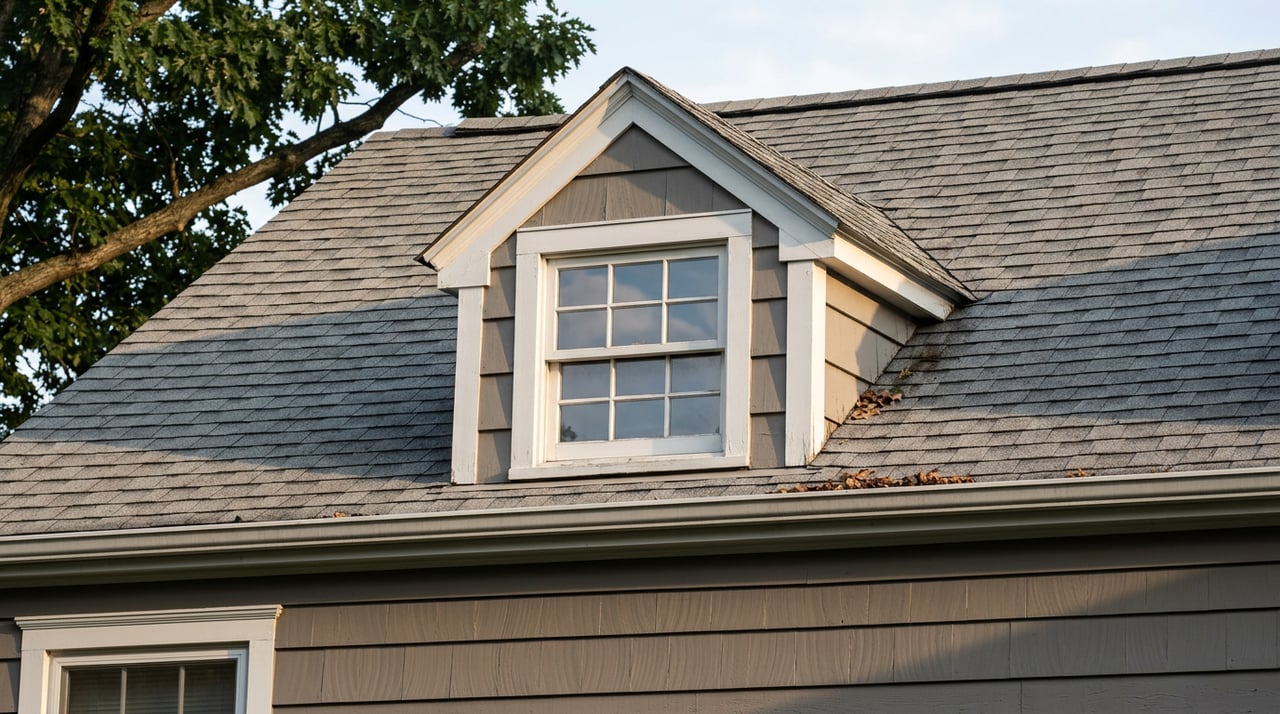
Other filings from the same recent stretch cover work on specific materials and building features. A January 2026 application for the barn at 16 East Weatogue Street specified a total siding replacement using like materials. A May 2026 application for the home at 26 East Weatogue Street covered ridge board replacement across all roof lines and dormers. These filings illustrate the commission's case-by-case review of exterior maintenance applications.
How Connecticut's Solar Provision Applies
Connecticut law is often summarized as protecting a homeowner's right to add solar panels even inside a historic district. The statute that creates this protection, Section 7-147f of the Connecticut General Statutes, does say a commission cannot deny a Certificate of Appropriateness for a solar energy system designed for the use of renewable resources. The commission can impose conditions on placement and design as long as those conditions do not significantly reduce the system's effectiveness.
The statute also provides an exception to that protection. A commission may still deny the application outright if it finds that the installation "cannot be installed without substantially impairing the historic character and appearance of the district." That clause is the only lawful basis for an outright denial, since conditions and design modifications are supposed to be the preferred remedy short of a flat no.
In March 2022, an application to install 24 rooftop solar panels on a home at 45 East Weatogue Street, in the R-40 zone, was denied. The same meeting approved, with conditions, a separate application for a 36-by-34-foot post and beam barn at a different address on the street. The available account does not establish why the commission denied the solar application.
What This Means if You're Buying or Selling on East Weatogue Street
For a buyer, the disclosure form will tell you the property sits in the district. It will not tell you what that means for the renovation you are already picturing. Before you write an offer with any contingency tied to exterior work, whether that is new siding, a roofline change, or a solar array, it is worth pulling the commission's recent meeting minutes and legal notices for the street. They are public and they show you what has actually been approved, conditioned, or denied in the past few years, which is a far better guide than the ordinance text alone.
For a seller planning improvements before listing, the lesson from the Bennett filing is to start the commission conversation early and expect a back-and-forth on materials rather than a single approval. Budget the three-week filing window plus whatever revision cycle your project needs, not the timeline you would use for a comparable house outside the district.
For anyone weighing solar as part of a purchase or a pre-sale upgrade, treat it as a design conversation with the commission rather than a guaranteed right. Rear-facing placement, lower profile mounting, and materials that read as less visually intrusive from the street have a better track record elsewhere in Connecticut's historic districts than a full street-facing array, even though the statute in theory protects the installation either way.
Frequently Asked Questions
Does the historic district restrict what I can do inside the house? No. The commission's authority under state law covers only exterior architectural features visible from a public road or place. Interior layout and finishes are outside its jurisdiction entirely.
How do I find out if a specific address is inside the district boundary? The district runs along East Weatogue Street and Hartford Road. The town's Historic District Commission and Planning and Land Use Department can confirm boundary status for any specific parcel, and it is worth confirming before you finalize renovation plans rather than after.
Is solar effectively banned in East Weatogue? Not by rule. State law leans toward approval with conditions, and most solar-related filings around Connecticut resolve that way. A 2022 solar application on East Weatogue Street was denied.
How much time should I build into a renovation timeline for commission approval? Plan for at least one full meeting cycle beyond your building permit timeline, and expect that a straightforward exterior change can still take multiple filings if the commission asks for a different material or design, the way the siding application at 19 East Weatogue Street did over the course of nearly a year.
If you are weighing a purchase in East Weatogue, or preparing a historic-district home for sale and want a clear read on what a renovation timeline actually looks like before you list, Diana Brown can walk you through it. Schedule a market consultation and get a straight answer on what the commission process means for your specific address before you write an offer or a listing agreement.
This article is general information, not legal, tax or financial advice. Consult a qualified professional about your situation.